Advancement in Flash Tank Inlet Nozzle Design

CFD Design & Engineering has significant experience modeling a range of Top and Bottom Entry Flash Tanks. We have recently completed a project modeling Bottom Entry Flash Tanks and as part of this work we have been researching the underlying physics and related liquor droplet theory.

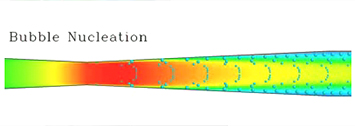
We have made some important advancements in our understanding of the key physical processes and CFD modeling approach. Our latest CFD models now considers the process of droplet break-up, coalescence and splashing within the Flash Tank leading to a much clearer picture of how FT's operate, factors influencing the separation performance and carry-over.

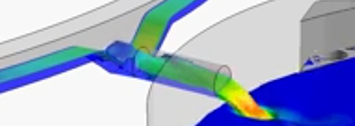
Based on our recent work, we have developed a novel new design for the internal nozzle for Top Entry Flash Tanks that addresses the pitfalls of the current Top Entry nozzles. The current CFD models of this new design indicate a condensate quality similar to a Bottom Entry design.

Improvements:

Larger droplets entering the FT

No jet penetration of the liquor surface

Lower peak velocities within FT vapour space

Significant improvement in the separation performance of the FT

Reduced FT and Vapour Header scaling and Heat Exchanger fouling

Improved condensate quality

Steadier process operation


Droplet Size Distribution

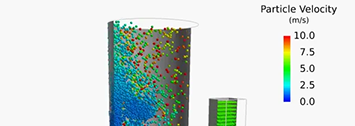
The droplet size distribution entering the FT is a critical factor affecting the overall separation performance.

High velocities within traditional flash tank internal tees result in droplet breakup and high energy droplet impacts. These wall impacts result in splashing, decreasing the size of the droplets entering the FT.

The new nozzle design addresses these issues, promoting coalescence and increasing the diameter of the droplets leaving the inlet nozzle. The significant reduction in the number of the sub 150 micron droplets results in a step improvement in flash tank performance.


Undisturbed Liquor Surface

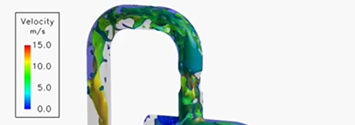
High exit velocities from the internal nozzle in the traditional design results in penetration of the liquor surface and is responsible for splashing, secondary entrainment and high vapour velocities entering the vapour space.

The new nozzle design achieves a very stable liquor surface as illustrated here.

Stable Vapour Space Velocities

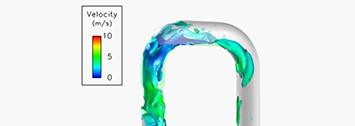
The rise velocity of the steam in the vapour space determines the largest droplets that can be carried through to the vapour headers.

The new design achieves a very stable velocity profile without the high peaks of upward and downward velocities associated with traditional designs.

The net result is greatly improved separation and lower scaling rates.


Clear Cost Benefits:

More cost effective than Bottom Entry conversions

  • Easy to implement with no external piping modifications
  • No change in pressure drop or flashing inception point
  • No changes required to control strategy, operations or maintenance

Improved energy efficiency

  • Reduce heater fouling
  • Improved heat transfer and energy efficiency
  • Improved condensate quality.

Increased FT turn-around times

  • Reduced scaling and erosion rates
  • Fewer unplanned outages from scale collapse/blockages

Reduced maintenance costs

  • Lower descale costs on FT, piping and heaters
  • Greater equipment availability